
Key Takeaways
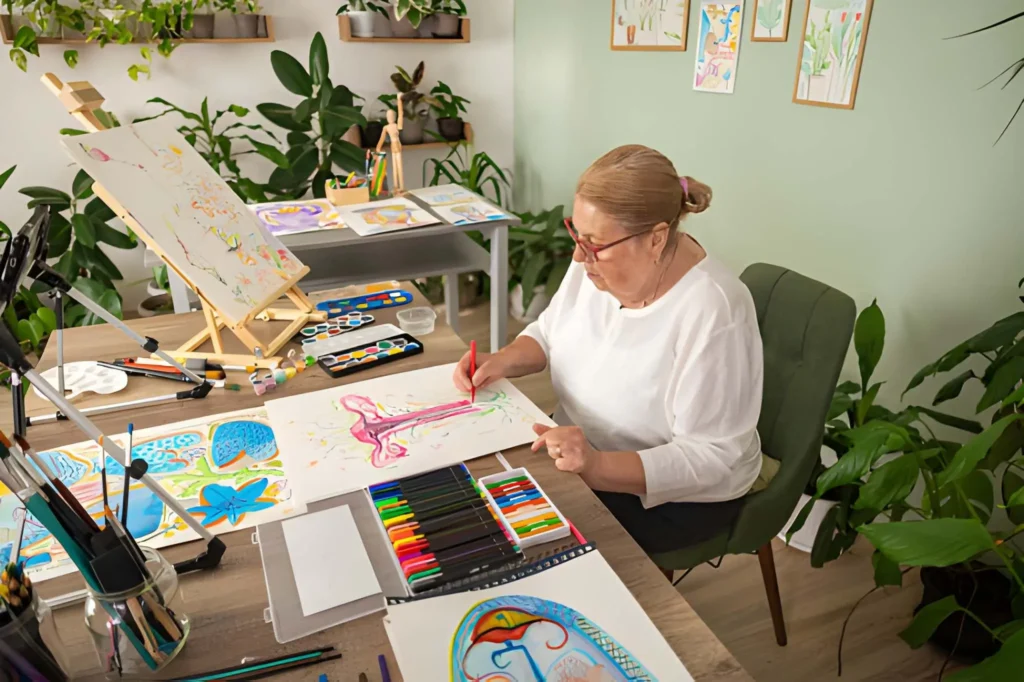
- Adult coloring is a powerful and accessible tool for reducing stress, anxiety, and mental overload.
- The act of coloring promotes mindfulness and focus, offering benefits similar to meditation.
- Coloring encourages creativity and self-expression without the pressure of artistic skill or perfection.
- Regular coloring can support fine motor skills, hand-eye coordination, and cognitive health.
- This affordable and flexible activity also fosters social connection through in-person groups and online communities, making it beneficial for both mental and emotional well-being.
Introduction
Coloring isn’t just an activity for children. Over recent years, adults have increasingly embraced coloring as a path to well-being, rediscovering its profound therapeutic potential. What was once a simple childhood pastime has now become a powerful tool for mental health. The rise in popularity of adult coloring books, featuring beautifully illustrated patterns and inspiring mandalas, reflects a shift in how creative relaxation is valued in adulthood. These coloring books offer adults a way to relax and reconnect with their creativity, providing a unique opportunity to disconnect from our digital devices and the overload of modern life. The allure lies in its simplicity—anyone can reap profound benefits with just a set of colored pencils and a page to fill.
The mental health benefits of coloring are both immediate and long-lasting, extending well beyond an hour of artistic play. People who regularly color often experience a reduction in stress and anxiety, enhanced mindfulness, and an improved mood. The simple pleasure of choosing colors, blending shades, and bringing an image to life helps to quiet distracting thoughts and foster a sense of accomplishment. This sense of achievement, no matter how small, can be a much-needed confidence boost. In our world of constant notifications and ever-growing to-do lists, having a mindful escape is more valuable than ever. Even just a few minutes of focused coloring can help break the cycle of overthinking and provide clarity.
Stress Reduction Through Coloring
One of the most significant benefits adults experience from coloring is stress relief. Immersing oneself in filling intricate patterns with color allows the mind to temporarily shut out worries and anxieties, creating a peaceful break from daily pressures. Research from the Mayo Clinic Health System highlights that coloring can facilitate mindfulness, directing your attention away from intrusive thoughts and towards the present-moment experience. As you become absorbed in the process, your heart rate and breathing may naturally slow, helping your whole body relax. This focused attention promotes relaxation, making it easier for individuals to decompress after a stressful day and return to daily tasks with a calmer mindset.
Coloring is often recommended as a self-care practice because it’s easy to start and can be adapted to nearly any environment, whether at home, during travel, or in quiet moments at work. In a society filled with screens and quick distractions, coloring serves as an anchor, grounding our focus in the soothing repetition of filling spaces with color. Over time, regularly practicing such forms of creative relaxation may help lower baseline levels of stress.
Enhancing Mindfulness and Focus
Coloring uniquely encourages mindfulness, a practice that involves bringing your full attention to the present moment. Each stroke demands concentration, gently guiding attention away from rumination and onto the colors and designs at hand. With each choice will you use blue or green, shade lightly or blend deeply? your mind becomes engaged in the here and now. This effect closely resembles the benefits of meditation, as the act of coloring can induce a calm and centered mental state that lasts well after the activity ends. According to the Cleveland Clinic, the mild concentration required by adult coloring keeps you engaged enough to be present while giving your brain a break from more taxing activities.
In addition to relieving stress, this state of mindful focus can improve overall cognitive clarity. When practiced regularly, coloring can help individuals develop better control over their attention spans, making it easier to resist distractions in other areas of life, such as work or study. The dedicated act of coloring, with its clear beginning and end, also provides a low-pressure model for setting and achieving small goals, which can translate to greater self-discipline in daily routines.
Boosting Creativity and Self-Expression
Many adults shy away from traditional art forms, believing they lack the skill to paint or draw. However, coloring books remove this pressure and create a welcoming environment for creative exploration, allowing everyone to participate regardless of experience. Whether you choose bold, unconventional color palettes or prefer symmetry and realism, coloring provides a safe space for personal expression. It invites participants to make decisions and experiment without fear of judgment, unlocking creative impulses often stifled by self-doubt or the demands of perfection. This process is not about perfection but about offering your mind the freedom to express itself non-verbally. Over time, these creative pursuits can enhance your sense of self-efficacy, inspire you in other areas, and improve your mood, serving as a buffer against depression and anxiety.
Through the lens of play, coloring can help adults reconnect with their inner child and rediscover the excitement of creativity for its own sake. The more you practice, the more you may find yourself experimenting, not only on paper but also in other life situations demanding problem-solving or innovation.
Improving Motor Skills and Coordination
While often associated with mental benefits, coloring also has tangible physical perks. The repetitive movements required to stay within the lines help refine fine motor skills and hand-eye coordination, which are essential for daily functioning. For older adults, regular coloring can help maintain dexterity in their hands and fingers, which is important for performing daily activities independently, such as writing, cooking, and even buttoning clothes. This simple, low-impact exercise engages multiple areas of the brain and can help maintain cognitive health with age. Coloring can serve as a gentle, enjoyable form of rehabilitation for those recovering from injury or coping with certain neurological conditions that affect motor control, as it encourages patience and builds confidence in physical movement.
Social Benefits and Community Building
Though introspective in nature, adult coloring can also offer social advantages. Many communities now organize coloring groups, providing a relaxed setting for individuals to meet, share techniques, and connect over a shared hobby. These in-person sessions provide an opportunity for laughter, support, and the exchange of creative ideas, making them a favorite among individuals seeking new friends or a supportive social circle. Online forums and social media groups dedicated to coloring also provide opportunities to showcase finished artwork, exchange encouragement, share feedback, and foster a sense of community. These communities are invaluable resources for reducing isolation and increasing positive social interaction, especially for those who may struggle to meet others through traditional avenues. By participating in these groups, individuals may experience a boost in confidence simply by witnessing the appreciation others have for their efforts.
Accessible and Affordable Therapy
One of coloring’s greatest strengths is its accessibility. There’s no need for expensive lessons or specialized equipment; basic coloring books and pencils or markers are enough to get started right away. Flexible and portable, coloring can easily fit within busy routines offering comfort at home, during a commute, waiting for an appointment, or even while listening to music or an audiobook. This affordability makes coloring an appealing option for anyone seeking to improve or maintain their mental well-being without a significant investment in time or resources. In contrast to structured therapies, coloring is available anytime, can be as brief or lengthy as desired, and does not rely on schedules or appointments, making it uniquely adaptive to a wide range of lifestyles and needs.
Final Thoughts
Embracing coloring as part of a routine can offer a wide spectrum of mental health benefits. Whether seeking stress relief, a mindful escape, creative expression, social connection, or improved motor skills, this accessible pastime stands out as a truly versatile tool. With virtually no barriers to entry and infinite scope for discovery, it’s no wonder adults everywhere are picking up coloring books to rediscover calm and happiness. The next time you feel overwhelmed by the demands of modern life, allow yourself a moment to unwind and discover the calming, joyful effects that await you with a simple coloring page. It may be a small act, but its potential to uplift mind and spirit is surprisingly profound.
Also Read-The best tech trends for small businesses in 2024